
Uncategorized
Strengthening Ghana’s Energy Future: Why AI-Driven Predictive Maintenance Is the Next Step Toward System Reliability


Ghana’s energy sector has long been a story of progress and challenge. From the historic Akosombo Hydroelectric Plant, which powered national growth in the 1960s, to the more recent adoption of combined-cycle plants that provide flexible and cleaner generation, the country has steadily evolved its power infrastructure. Yet, beneath these milestones lies a persistent obstacle that continues to strain both operations and the public maintenance inefficiency.
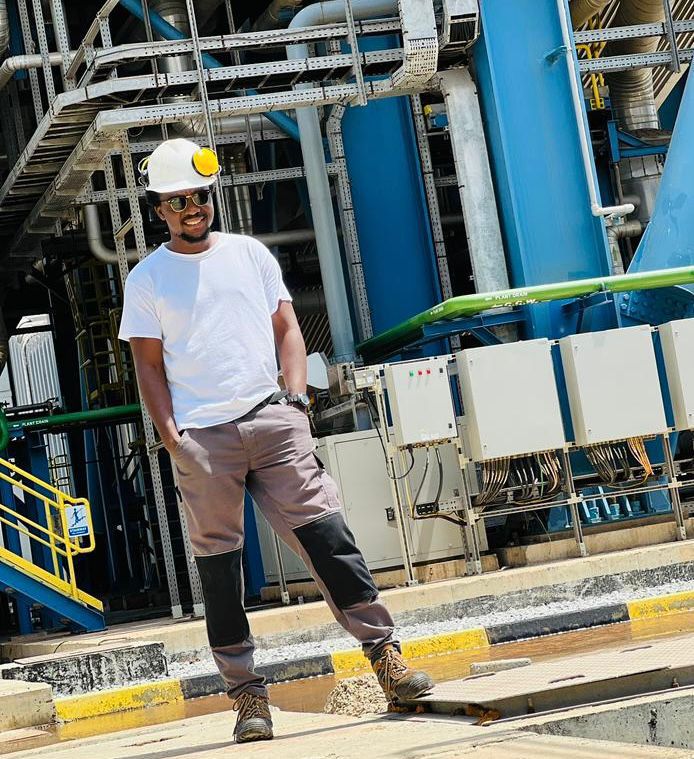
As someone who has worked in power generation environments ranging from hydro stations to large-scale combined-cycle facilities, I have seen firsthand how delayed maintenance and unplanned outages ripple across the system. A single turbine inspection that extends from two weeks to two months doesn’t just affect megawatts on a chart, it affects hospitals running on backup generators, businesses losing productivity, and households enduring repeated blackouts.
These challenges are not unique to Ghana. Across many developing energy markets, maintenance cycles are still largely reactive. Teams respond to faults after they occur rather than predicting and preventing them. This reactive approach increases downtime, drives up costs, and erodes public confidence in the power supply.
The Hidden Cost of Downtime
Behind every maintenance delay are systemic issues: limited access to spare parts, manual inspection methods, and fragmented data systems. Maintenance logs are often paper-based, and performance readings from sensors are under-analyzed or isolated across departments. The result is that equipment health is not continuously tracked, and faults usually escalate unnoticed until a forced shutdown occurs.
For example, a minor vibration in a gas turbine bearing easily detectable through pattern recognition can go unnoticed until it triggers a full-scale failure requiring part replacement, weeks of downtime, and costly import delays. The public only sees the outcome: lights out, fuel costs up, and frustration growing.
A Smarter Way Forward
This is where Artificial Intelligence-driven predictive maintenance can change the story. By combining sensor data, machine learning models, and historical maintenance records, AI systems can identify patterns that signal early signs of failure long before a human operator notices.
In a combined-cycle plant, for instance, AI algorithms can track compressor performance, combustion efficiency, and exhaust temperature deviations in real time. Instead of waiting for a breakdown, maintenance teams can schedule targeted interventions exactly when and where they are needed, minimizing downtime and reducing costs.
Predictive maintenance also enables resource optimization. Spare parts can be ordered ahead of time, workforce planning becomes more efficient, and fuel usage can be fine-tuned to improve plant efficiency. Over time, these benefits cascade into higher system reliability, lower tariffs, and better service for consumers.
Ghana’s Readiness for AI Integration
Ghana is well-positioned to begin this transition. The country already operates a mix of thermal, hydro, and renewable facilities, creating a diverse data landscape suitable for predictive modeling. With support from government agencies, academic researchers, and private utilities, an integrated predictive maintenance platform could become a national asset.
Such an initiative could start with a pilot program in one of the major combined-cycle stations, integrating turbine performance data, environmental readings, and maintenance history into a unified monitoring dashboard. From there, local engineers could be trained to interpret AI-driven alerts, building long-term technical capacity.
The goal is not to replace human expertise, but to enhance it by giving operators the tools to make data-backed decisions that keep plants running safely and efficiently.
Empowering People Through Reliability
Energy is not just an engineering matter; it’s a social one. Every extended maintenance outage impacts real people: students studying by candlelight, small business owners struggling with generator costs, and healthcare centers balancing limited supply. Reliable electricity improves public health, education, and economic growth.
By reducing the frequency and duration of outages through predictive maintenance, Ghana can strengthen not just its grid, but also its social resilience. The ripple effect is profound: more stable operations mean less wasted fuel, fewer emergency repairs, and a stronger foundation for renewable integration.
Looking Ahead
The future of Ghana’s power sector lies in intelligent systems that can learn, adapt, and anticipate. Predictive maintenance offers a bridge between today’s operational struggles and tomorrow’s energy security. If Ghana embraces AI integration now, it could set a regional standard for reliability and innovation across West Africa.
“Maintenance should no longer be a waiting game,” I often tell young engineers. “With the right data and tools, we can move from reacting to predicting and from predicting to preventing.”
By combining technical expertise with digital transformation, Ghana has the chance to redefine how it manages its most valuable resource: the power that keeps its people and industries moving.
(Story: Selasi Agbale Aikins)